
Reforming Egypt’s Food Subsidy System
Balancing Social Protection and Fiscal Efficiency
Walaa-Eldeen Bakry and Sherif MohyEldeen
DOI: https://doi.org/10.64241/imepp.v1i2.001
ISSN: 3068-2851
Executive Summary
Keywords: Food Subsidy Reform, Digital Governance in Social Policy, Social Protection Systems, Fiscal Sustainability, Targeting, Cash Transfers
Egypt’s food-subsidy regime, one of the oldest in the Middle East, stands at the intersection of social protection, political stability, and fiscal sustainability.
Over the past decade (2015–2025), successive governments have sought to reduce the relative fiscal weight of subsidies, driven by budget pressures, inflation, and external adjustment programmes. Among citizens, however, these measures are often perceived as a retreat from the state’s historic social responsibilities, reinforcing concerns about affordability and food security.
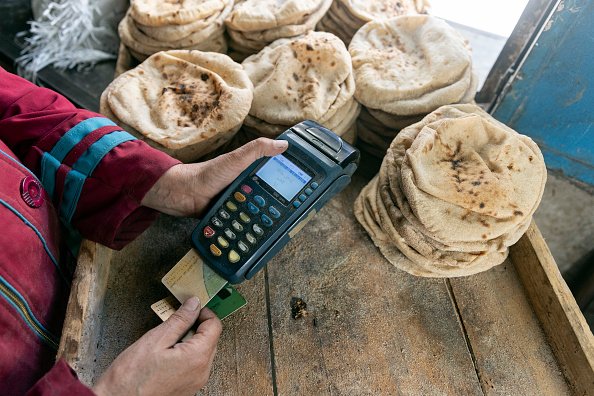
Food subsidies remain a central pillar of Egypt’s implicit social contract. Originating in the 1940s and expanded after the 1967 war, the ration-card and bread-subsidy systems today reach more than half of the population. While their contribution to social stability has been significant, the current in-kind model has become economically inefficient, weakly targeted, and increasingly ineffective in protecting real purchasing power amid high inflation and currency depreciation.
Government discourse has increasingly been suggesting a gradual transition from in-kind subsidies toward cash-based support. This paper critically examines that transition, moving beyond abstract debate to propose a fiscally credible, socially targeted, and digitally enabled reform model for Egypt’s food-subsidy system.
The analysis integrates macro-fiscal assessment, institutional evaluation, and social-welfare considerations, and is informed by comparative experiences from the United States (SNAP), Brazil (Bolsa Família), India, Morocco, and Jordan.
The paper’s central contribution is the design of a three-tier, income-linked cash transfer system covering 58.5% of the population, aligned with World Bank vulnerability benchmarks. The proposed system differentiates between very poor, poor, and vulnerable households, delivers benefits digitally through smart cards linked to bank accounts or mobile wallets, and indexes transfers to food inflation to preserve real value.
Eligibility is anchored to household income thresholds linked to the statutory minimum wage, while coverage is capped at four persons per household to ensure fiscal predictability.
The proposed reform maintains total expenditure broadly within the current food-subsidy envelope (approximately EGP 160 billion annually). Structural savings from removing subsidised fuel to bread bakeries and replacing state-managed distribution points with private retailers generate fiscal space, providing the government with flexibility to enhance support during inflationary shocks, introduce targeted social incentives, or strengthen indexation mechanisms without increasing overall budgetary pressure.
The paper argues that subsidy reform should not be driven by fiscal arithmetic alone but by a coherent national strategy that restores food security, improves targeting, and rebuilds citizen trust. When properly sequenced, transparently communicated, and supported by robust digital infrastructure, a transition to income-tested cash support can reconcile fiscal sustainability with Egypt’s enduring commitment to protecting poor and vulnerable households.