Milestones from Our First Year

By the end of 2025, the Middle East Institute for Public Policy (IMEPP) will have completed its first year of work, laying the initial foundations of a think tank project dedicated to offering practical solutions to issues that directly affect citizens’ everyday lives away from slogans detached from reality.
Throughout 2025, the Institute published two policy papers addressing core issues in Egypt
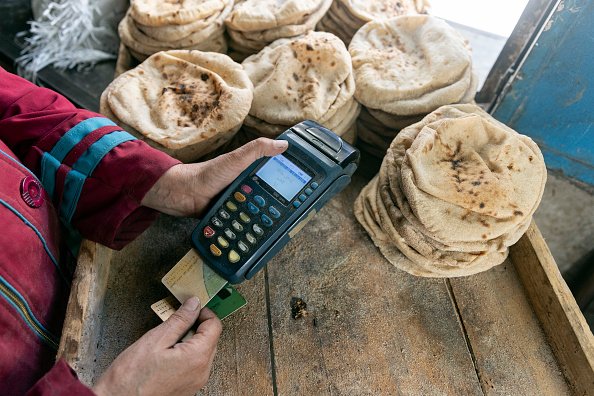
the first on the Old Rent Law, and the second on the food subsidy system. These papers represent a serious attempt to understand the complexities of existing policies and to propose alternatives that are open to debate and implementation, while considering free-market mechanisms and the protection of the most vulnerable groups.
The Middle East Institute for Public Policy (IMEPP) is a U.S. based nonprofit organization working to support policy reform in Egypt. We seek to engage policymakers, researchers, thought leaders, as well as regional and international partners, based on the conviction that economic policies are not merely numbers, but tools that directly shape citizens’ food security, housing, and opportunities in education and employment.
We believe that advocating for a free-market economy does not mean excluding citizens or placing additional burdens on them. On the contrary, it means searching for more efficient policies that position citizens as active participants in the market, enabling them to protect their rights and improve their quality of life. Our goal is to clarify, debate, and present the concept of the “free market” as a set of tools that can be leveraged in favor of society and citizens not against them.
At this stage, our primary focus is on Egypt. However, our vision is broader, and we plan to expand our work in the future to cover the Middle East and North Africa, driven by the belief that economic and social challenges across the region are deeply interconnected, and that the exchange of expertise and policy experiences is a necessity, not a luxury.
In the coming year, we will launch a nonresident fellowship program, details of which will be announced in the coming days aimed at directly engaging young people in the production of policy solutions and proposals. We believe that the most realistic and sustainable ideas must actively involve youth, as they constitute the largest segment of Middle Eastern societies.
As we conclude our first year, we reaffirm our commitment to continuing to produce serious policy work, remaining open to critique, and collaborating with a wide range of stakeholders, placing citizens’ interests at the heart of every discussion, and striving to contribute to a more prosperous and stable future.