Is Pakistan a newcomer to Middle Eastern geopolitics or is its latest balancing act as the mediator between Iran and the United States an extension of historical engagement in the region?
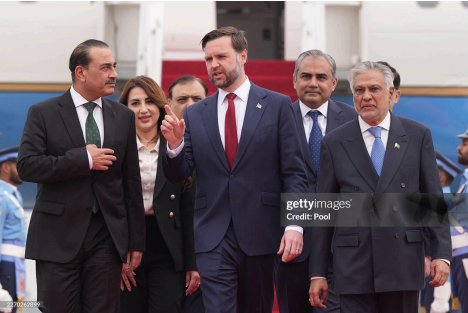
Recently, the eyes of the world have turned to Islamabad as leading Pakistani officials attempt to broker a sustainable peace between Iran and the United States. To some observers, Pakistan’s role as a peacemaker may contradict its longstanding reputation as an international pariah, and its involvement in the Middle East appears random. However, Pakistan’s
involvement in the Middle East is not a new phenomenon; the current negotiations are the latest chapter in a story that begins over a century ago under the British Raj.
The cultures of the Gulf, the Levant and South Asia became inextricably linked under British colonial rule. The British Empire in 1913 was the largest empire in human history, reigning over 400 million people. Ranging from the vast mountains and valleys of Canadian British Columbia to the coral islands of Kiribati in Oceania, the various British colonies comprised a complex web of trade routes and strategic strongholds. The Levant Company, with factories across the Ottoman Empire, and the East India Trading Company situated in
present-day India/Pakistan/Bangladesh/Burma were integral but competing cogs in the British imperial machine.
Indeed, almost a third of the Arabian Peninsula, including Qatar, Oman, Bahrain, Yemen, the UAE, and Kuwait were legally considered and governed as a part of the British Indian Empire. Indian troops patrolled the regions from Aden to Kuwait, and until 1959 the official currency of the Gulf was the Indian Rupee. According to the BBC, the Sultan of Oman spoke Urdu more fluently than Arabic. ‘Pan-Islamic’ initiatives such as the Khalifat movement (1919-1924), during which Indian Muslims attempted to preserve the Ottoman Caliphate, reinforced the perceived and diplomatic Muslim ties between the subcontinent and the Middle East that persists to this day.
During the Second World War, the British deployed the Indian army to the Middle East where it quelled uprisings and defended military bases against Axis-affiliated forces. Indian brigades secured the ports at Basra and Bandar Shapur. Ground troops from the British Raj played an equally important role in Allied victories in the Levant. The 10th Indian Infantry Division’s approach towards Baghdad triggered the Iraqi government’s request for a ceasefire, and the 5th Indian Infantry Brigade in collaboration with the 3rd Punjabi Battalion supported the capture of Damascus. In Iran, the 8th Indian Infantry Division and the Baluch Rifles were mobilized to secure the Haft Kel oilfield and refineries in Abadan.
The relationship initiated by the British between present-day Pakistan and the Middle East far surpassed the Empire’s influence. After gaining independence from British colonial rule and the partition of India and Pakistan, the Muslim soldiers who survived their tours in the Middle East went on to found the Pakistani Army, a central governing institution to this day. The relationship between Pakistan and the Middle East evolved from cross-regional military campaigns and shared colonial government to military mentorship, strategic defense alliances, economic reliance and a pragmatic power balancing act.
Pakistan’s military has actively engaged in the Middle East in past decades. Pakistan has reportedly trained more Arab armies than any other country. Following independence, Pakistan trained and advised the nascent security forces of Gulf countries. Pakistan has participated in multinational air combat exercises such as the annual ‘Spears of Victory’ Participating in these exercises benefits Pakistan as well; allowing it to train against the Western hardware India uses, such as the French Rafale jets — a strategic advantage. Pakistani military personnel have played combat roles in the Arab-Israeli wars of 1967 and 1973 while also assisting Oman in crushing the Dhofar Rebellion between the 1960s and 1970s. The Pakistani Army’s relationship with Saudi Arabia is both long and deep. Pakistani pilots flew Saudi jets to repel Yemeni incursions in 1969 and Pakistan is the only country to maintain a continuous military presence in Saudi Arabia since before the First Gulf War. These ties have only been strengthened by the 2025 Strategic Mutual Defense Agreement between the two nations. Even Pakistan’s political involvement with Iran is also not a new phenomenon: it mediated during the Iran-Iraq War in the 1980s, providing
institutional memory for its ongoing role in the negotiations between Iran and the United States.
Middle Eastern and specifically Gulf countries play an outsized role in Pakistan’s economy. Saudi Arabia alone has consistently provided billions of dollars to help Pakistan meet debt-service obligations. Millions of Pakistanis live and work across the Gulf; their remittances
serve as lifelines for thousands of households and businesses.Yet despite this, its close relationship to Saudi Arabia, Pakistan has sought to revive plans for oil and gas pipelines with Iran to remedy the domestic energy crisis. Pakistan has maintained diplomatic, economic, and military relationships with various competing regional powers, pursuing its own incentives while simultaneously treading lightly across the minefield of regional Middle Eastern dynamics, a pragmatic but potentially dangerous feat.
Pakistan is decidedly not a newcomer to the Middle East. In fact, its ongoing role as the mediator between Iran and the United States is the result of longstanding trade and military relationships rooted into a history of colonial governance. Within this shared ecosystem there are very real geopolitical contests with serious ramifications, not only between states in the Middle East but also their Western allies and proxies. Pakistan has thus far managed to play a strategic game on multiple fronts. As tensions in the Middle East continue to rise and the role of the United States is being questioned, it will be interesting to see how Pakistan builds on this recent diplomatic role and perhaps steps in to fill a potential military and diplomatic geopolitical gap in the region
Until next time, Zaranama
Sources:
- https://www.bbc.com/news/articles/cgq3wlp22j9o
- https://www.middleeasteye.net/discover/shattered-lands-how-doha-and-dubai-nearly-joi ned-india-or-pakistan-1947
- https://gulfif.org/the-evolving-nature-of-pakistans-defence-cooperation-with-the-arab-gu lf-states/
- https://www.pgurus.com/the-architecture-of-security-secondment-pakistans-military-dep loyments-and-private-contracting-in-saudi-arabia-qatar-and-the-uae/
- https://www.newarab.com/news/why-did-pakistan-deploy-soldiers-fighter-jets-saudi-ara bia
- https://wp.towson.edu/iajournaldev/2017/05/03/pakistan-in-the-middle-east-a-policy-of pragmatism/
- https://www.muslimwarmemorial.org/education/the-role-of-muslims-in-ww2/
- https://warfarehistorynetwork.com/article/fighting-world-war-ii-in-the-middle-east/
- https://encyclopedia.1914-1918-online.net/article/khilafat-movement/
- https://www.politico.eu/article/us-iran-delegations-pakistan-peace-talks-amid-fragile-cea sefire/